
Welcome to the Resources Hub
Here we aim to provide you with some background knowledge to help you gain a deeper understanding of colour preferences and how this information can be applied to you both as an individual, and as a member of a team or organisation.
Do remember to check back regularly as we continue to develop our supporting materials.
C-me Colours and Behaviours
Each of the four colour preferences is indicative of different observable characteristics. Everyone is their own unique blend of all four colour preferences, and no colour preference is better than any other.
Our colour preferences aim to:
1. Help individuals to self-identify which colour behaviours they may be exhibiting at any particular time, and what they may wish to be aware of in order to get the most value out of that preference.
2. Recognise what behavioural preferences your colleagues, friends or family may be operating out of at any given time, and how you may be able to flex your behaviour or responses to get the most out of those conversations and interactions.
Resilient Strengths
When we talk about resilient strengths, we are essentially describing strengths or skills that remain consistent regardless of the context.
These speak to behaviours that are unlikely to require a great deal of effort or energy, as they are more likely to feel natural and be relatively instinctive.


Areas for Development
In contrast, areas for development represent potential challenges you may face and behaviours you may like to work on.
Turn challenges into a development plan:
1. Select 2 or 3 challenges you feel most apply to you and that negatively impact your performance
2. Recall situations where you were aware of these challenges
3. Identify options for adjusting these behaviours
4. Consult colleagues for their input and make a development plan
The Colours in Context
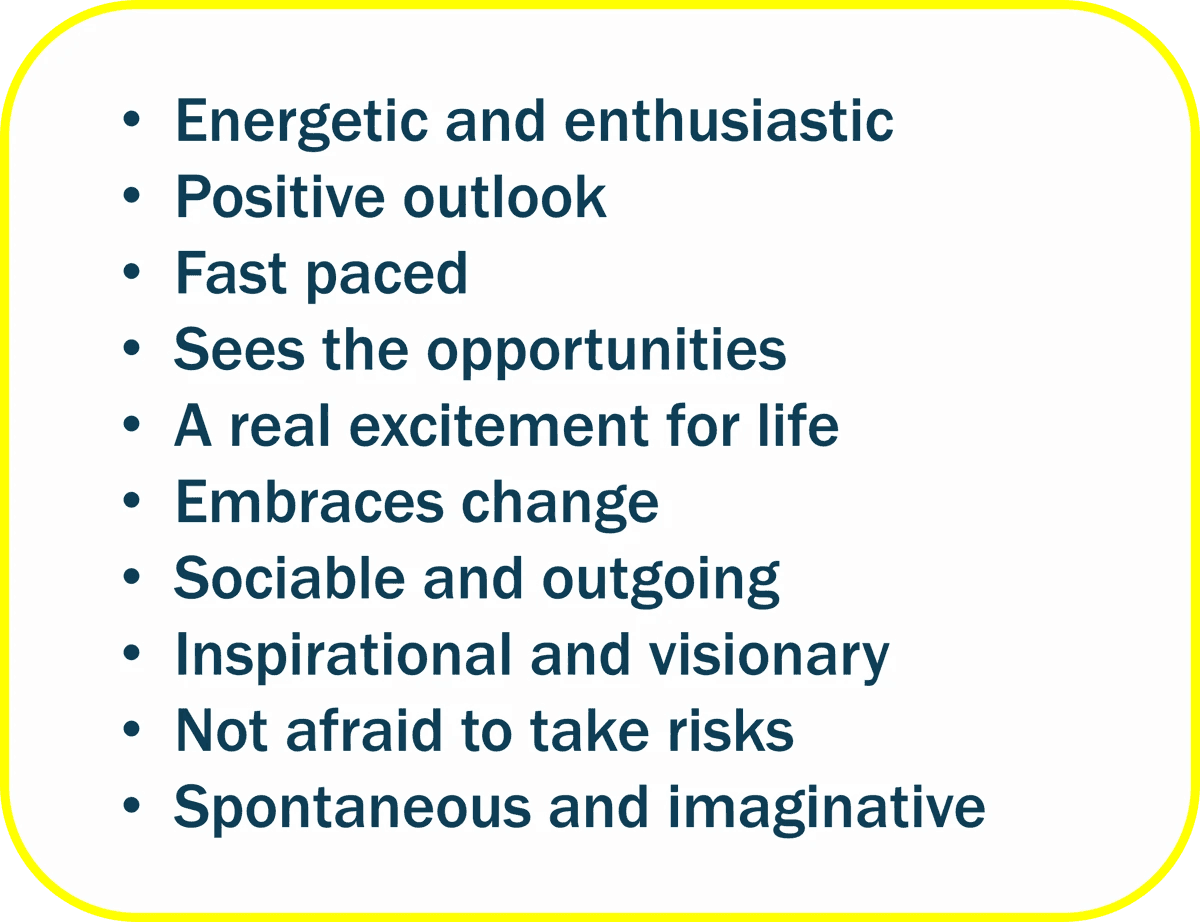
Context and environment can have a significant effect on how each colour preference can present in terms of behaviour: put simply, these can lead to us having a 'good day' or 'bad day'.
On a good day
'Good day' behaviours are those which we might see displayed by each colour preference in a relaxed or low stress environment. Often when we're performing at our best, requiring little effort or energy.


On a bad day
'Bad day' behaviours may be behaviours that surface in a less positive environment. This could be due to a number of factors including: workplace pressure, conflict, or periods of transition.


Communication Preferences
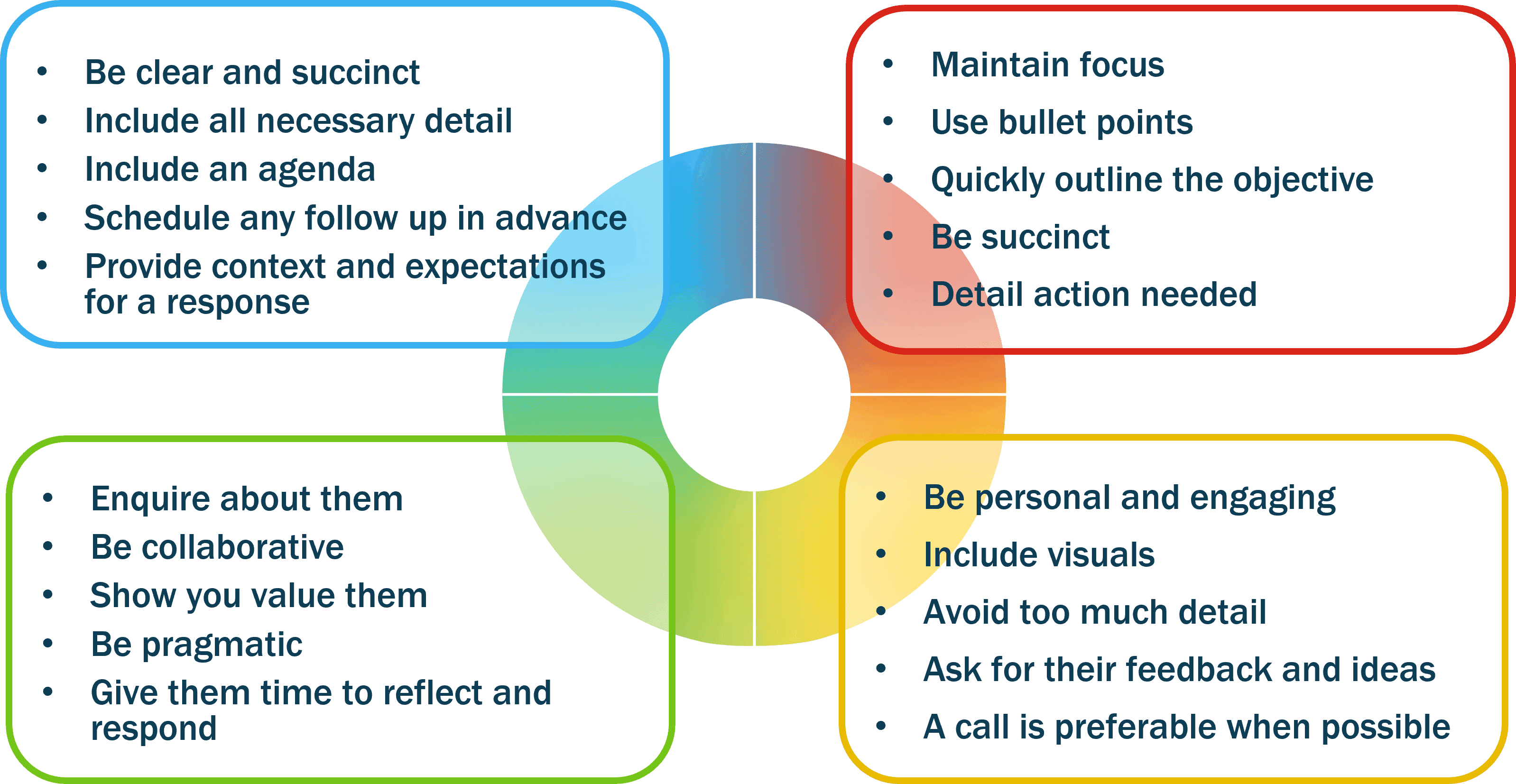
The way we prefer to communicate, and for others to communicate with us, can differ among the different colour preferences.
Here are some helpful tips for communicating across the colour spectrum.
Effective Communication
Do you know your team members preferred communication styles?
The following may help you think about communicating well with those who have a different colour combination to your own.


Ineffective Communication
What behaviours are best to avoid when communicating with members of your team?
The following may indicate some behaviours which could negatively impact on others around you.
Verbal Communication
Here are some pointers for verbally communicating with others who have different colour preferences.
Flexing into these different colour behaviours may lead to improved relationships if you consciously try to be:

Email Communication
Hybrid working may decrease the amount of face-to-face time we spend with colleagues. Here are some pointers for communicating effectively via email.